Russia Is Gearing Up for Nationwide Elections. This Is What You Need to Know.
Though United Russia is expected to dominate, the elections could offer insight into how the war in Ukraine has affected Russian politics.
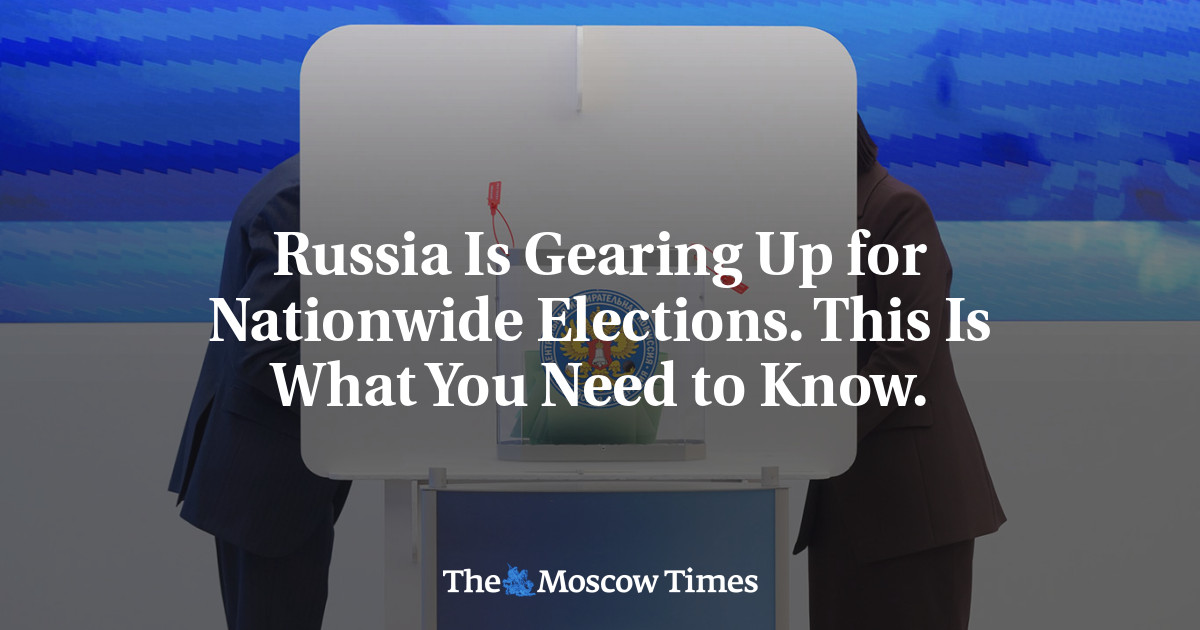
Russians will head to the polls in September to elect a new State Duma and regional officials in a vote that the ruling United Russia party is expected to dominate but which could offer insight into how four years of war in Ukraine have reshaped the country’s political landscape. The vote comes at a fraught time. The war is taking a mounting toll on the economy, while long-range Ukrainian drone strikes have led to a widespread fuel crisis. Half of Russians now describe the political climate as “tense.” Russia’s regions have reportedly been instructed to secure high voter turnout and a majority win for United Russia. Nevertheless, the vote remains an important instrument for the Kremlin to project popular legitimacy and demonstrate support for President Vladimir Putin and United Russia as both face unstable approval ratings. Reports have suggested the Kremlin could announce another round of mobilization after the elections, making a convincing electoral victory politically important for the ruling party. Other reports claim that senior officials were allegedly seeking to convince Putin to postpone the State Duma elections due to the Ukrainian drone campaign, though the Kremlin has denied this. The Moscow Times looks at the key trends to watch in the months leading up to September’s vote as well as what these elections could mean for the future of Russian politics. Which offices are up for election? State Duma and regional lawmakers, as well as the heads of 11 regions will be elected to office this Sept. 20 on the country’s Unified Voting Day. The most significant event will be the three-day State Duma elections on Sept. 18 to 20, which will see 225 lawmakers chosen in single-member constituencies and another 225 through party lists. This year's parliamentary vote will be the first in which residents of the Russian-occupied regions of Ukraine will take part. The vote will coincide with gubernatorial elections in 11 regions. Direct elections are scheduled in the Tver, Belgorod, Bryansk, Penza and Ulyanovsk regions, as well as in the republics of Mordovia, Tyva and Chechnya. In the North Caucasus republics of Dagestan, North Ossetia and Karachayevo-Cherkessia, regional leaders will be chosen by local legislatures rather than through a popular vote. Central Election Commission chief Ella Pamfilova. Yaroslav Chingaev / Moskva News Agency Voters in 39 regions will also elect members of regional parliaments, while municipal elections, including contests for city dumas, are expected to take place in nearly a dozen regions. Turnout expectations The Central Election Commission (CEC) says 17 political parties are eligible to take part in the parliamentary elections. The five major parties represented in the State Duma — United Russia, the Communist Party, the Liberal Democratic Party (LDPR), A Just Russia – For Truth and New People — are all automatically qualified to contest the election. Russia has about 111 million registered voters. The state-run pollster VTsIOM said that 66% of respondents said they planned to vote, while turnout intentions among young people were even higher (73%.) Yet 66% also said in May they did not know when the election would take place. Regional officials have reportedly been instructed to keep turnout at around 50%, the Vedomosti newspaper said . Electronic voting, which critics have accused of being a tool for vote rigging, has been approved in 33 regions covering roughly 48 million eligible voters. The ruling party United Russia, which holds 321 out of 450 seats in the State Duma, appears to be grappling with its approval ratings as Russia confronts mounting economic pressures, internet restrictions and a widening campaign of Ukrainian drone attacks. Although wartime polling is difficult to independently verify, support for United Russia currently stands at almost 34% and even fell to 29.3% in March, compared to around 40% after the start of the war in 2022. Polling by late Kremlin critic Alexei Navalny’s Anti-Corruption Foundation (FBK) estimates United Russia’s support at just 16%. President Vladimir Putin at the 22nd congress of the United Russia party on Sunday. kremlin.ru The approval rating of Putin, who formally led the party in 2008-2012, has also shown signs of declining — yet even according to the most unfavorable polling, his approval rating never fell below 65%. As a result, authorities have lowered target benchmarks for United Russia’s projected performance, especially in regions where its support is weaker, Vedomosti reported , citing sources close to the presidential administration and regional authorities. The party is reportedly heading into the elections with a lack of clear political direction, which caused frustration among the presidential administration, regional governors and party members. Formally led by former President Dmitry Medvedev, United Russia did not present its list of approved candidates for the parliamentary election until after its pre-election congr